

Wow! My first thought was that physical backup cards were a quaint niche for hobbyists. I was wrong in a way, though actually that first impression came from seeing cheap laminated copies of seed phrases at a garage meetup. The more I dug, the more I saw a real shift toward smart-card form factors that are rugged and instantly usable, and honestly somethin’ about that felt like common sense. Long story short, this isn’t just nostalgia dressed up as tech; it’s practical design meeting real user problems in the wild, where wallets meet pockets and subway commutes.
Really? Cold storage you can carry in a wallet, literally. Most people picture a metal plate or a ledger you tuck away in a safe, but backup cards are small, NFC-enabled, and built by companies that think like product designers rather than just cryptographers. They solve a daily friction point: people want security that fits into their routines, not extra rituals. And because they behave like a card, they’re easier to clone into a secure second copy without exposing your keys to a phone or laptop, which matters when you travel or move between homes.
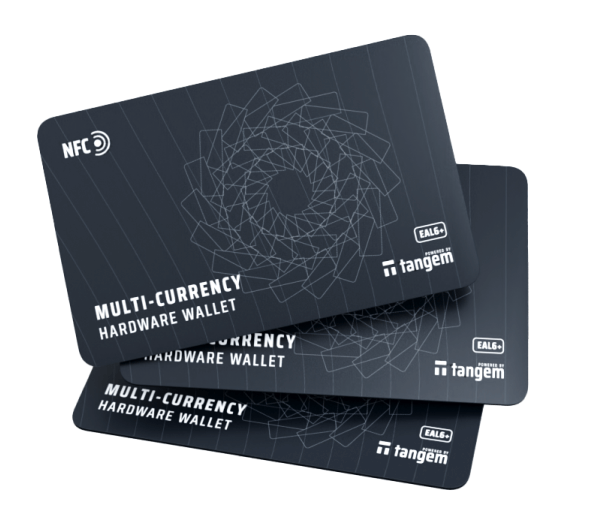
Where smart cards fit into your backup strategy
Here’s the thing. I’ve kept a few hardware devices over the years, and one consistent pain was the binary choice: either ultra-cold (vault, fireproof, very distant) or too-accessible (hot-wallet on a phone). A middle ground that actually works in daily life changes the game, especially for users who want less fuss and clear recovery paths. For many of us, a physical card that pairs with a secure element gives you tamper-resistant storage without the weight of a device, and products like the tangem hardware wallet illustrate how card-based UX can be made both slick and secure. Initially I thought smart cards would be niche, but then realized they address three real-world problems at once: portability, recoverability, and low friction for non-technical holders.
Wow! You should see how people react when I hand them a smart card demo. The instant recognition—it’s a credit-card thing, right?—lowers anxiety in ways silicon-only devices rarely do. On the other hand, there’s a technical backbone that matters: secure elements, attestation, and air-gapped signing options that stop remote extraction, though actually those are not magic bullets. What bugs me is how many people still write seeds on paper and tuck them into envelopes that end up in a junk drawer; a card forces you to make a better physical plan.
Really? There’s also a behavioral angle here. Backup cards create a habit loop—carry, check, replace—that’s visible and repeatable, unlike a seed phrase you never touch after setup. For families this is huge because two people can hold complementary cards and create distributed backups without sharing the raw secret in plaintext. I’m biased, but I think the ergonomics of a card win more often than the pure theoretical security of a seldom-tested cold vault. And besides, a tested recovery is worth more than a perfect plan no one rehearses.
Here’s the thing. Security is not just cryptography; it’s human workflows. You can build the most bulletproof device, though actually users will misplace or misuse whatever you give them if it doesn’t match their life. There are trade-offs: cards tend to rely on proximity (NFC) or simple QR-based interactions that are easy to use but require thoughtful threat modeling. So—on one hand—they reduce user error, and on the other, they require new user education around physical theft and social engineering risks, which many services overlook.
Wow! Let me tell you about a near-miss I had. I once stored a paper backup in a bank deposit box and couldn’t access it for weeks due to holiday closures—true story. That felt awful in the moment. Having a backup card with a clear recovery workflow would’ve saved me time and stress. The reality is that access latency matters: if you can’t recover within a reasonable window, the backup is effectively useless. Smart cards shorten that window without sacrificing offline security, provided you protect the card physically.
Really? Manufacturers are aware of the threat surface and are building around it, though not all do it well. You want features like secure element attestation, anti-cloning proofs, and hardware-backed PINs, and you also want transparent audits and open protocols so the community can vet claims. Many card vendors publish technical docs but then hide critical bits; that inconsistency drives me nuts. In practice, pick a card that balances clear design with verifiable security properties, and if you can, choose something with community adoption rather than a brand-new unknown.
Here’s the thing. There are cheap DIY options that encourage bad practices, and then there are purpose-built smart-card wallets that cost a bit more but are designed for real threats. The cheapest path rarely equals the safest path, especially when you’re protecting something that can wipe out life savings. I’m not 100% sure about the ROI threshold for every user, but for medium and long-term holders the extra cost of a trusted card is usually worth it. Also, redundancy matters—multiple cards in diverse locations beat a single golden card every time.
Wow! Consider legal and estate planning aspects. If you die tomorrow, what happens to your crypto? Backup cards make it easier to codify instructions because the physical object can be referenced in a will, safe deposit, or trusted custody arrangement without leaking private keys. There are still privacy trade-offs—if someone finds your cards they could try to coerce access—so combine cards with procedural defenses like multi-signature or time-delayed recovery. Practically speaking, thinking like a planner rather than a paranoid minimalist makes your legacy far more recoverable.
Really? In the US, a lot of users underestimate mundane risks: home fires, floods, theft during moves, or just losing a card while traveling. A robust plan uses geographic diversity—one card in a safe at home, another in a bank box, and a digital backup in an encrypted vault for emergency access. My instinct said a single SOLID card was enough, but then reality taught me redundancy is cheap insurance when balanced against asset loss. Also, practice the recovery steps out loud with your trusted contacts—don’t leave it all to an instruction manual.
Here’s the thing. Tech adoption will be incremental; not everyone will switch to cards overnight, and that’s okay. Some users will stick with familiar hardware devices, some will keep multisig setups, and others will prefer custodial solutions despite their trade-offs. On the flip side, smart-card wallets are lowering the barrier for non-tech folks to hold their keys without surrendering control to a third party, which matters for decentralization as a cultural value. My takeaway is simple: diversity in backup strategies is healthy for the ecosystem.
FAQ
How is a smart-card backup different from a metal seed plate?
Metal plates are resilient to fire and water, and that’s great for long-term physical durability, but they expose the seed phrase directly and require careful handling; smart-card backups can store keys inside a secure element and provide air-gapped signing, which reduces exposure while offering easier day-to-day use.
Can a card be cloned or stolen?
Short answer: the threat exists, though secure-element based cards include anti-cloning protections and PINs; always assume physical theft is possible and combine cards with additional protections like multi-signature, geographic redundancy, and procedural security to mitigate that risk.